Why Most Producers Never Finish Tracks
After more than two decades of making music, I still remember the familiar sting of watching another track fade away unfinished. What started as a promising idea ended up buried in a folder, left to collect digital dust… and leaving me to feel like a deadbeat dad.
It wasn’t for a lack of ideas or gear either, I had plenty of both. What I didn’t have was a clear understanding of why so many promising projects quietly died before they ever had a chance to breathe. Most producers I know share the same quiet graveyard of half-finished tracks and the reasons behind it are much deeper and more universal than simple procrastination or lack of talent.
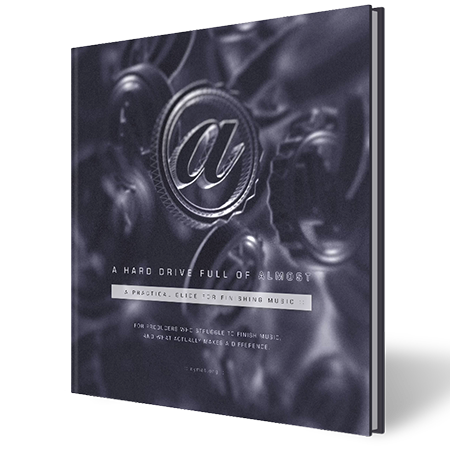
A Hard Drive Full of Almost
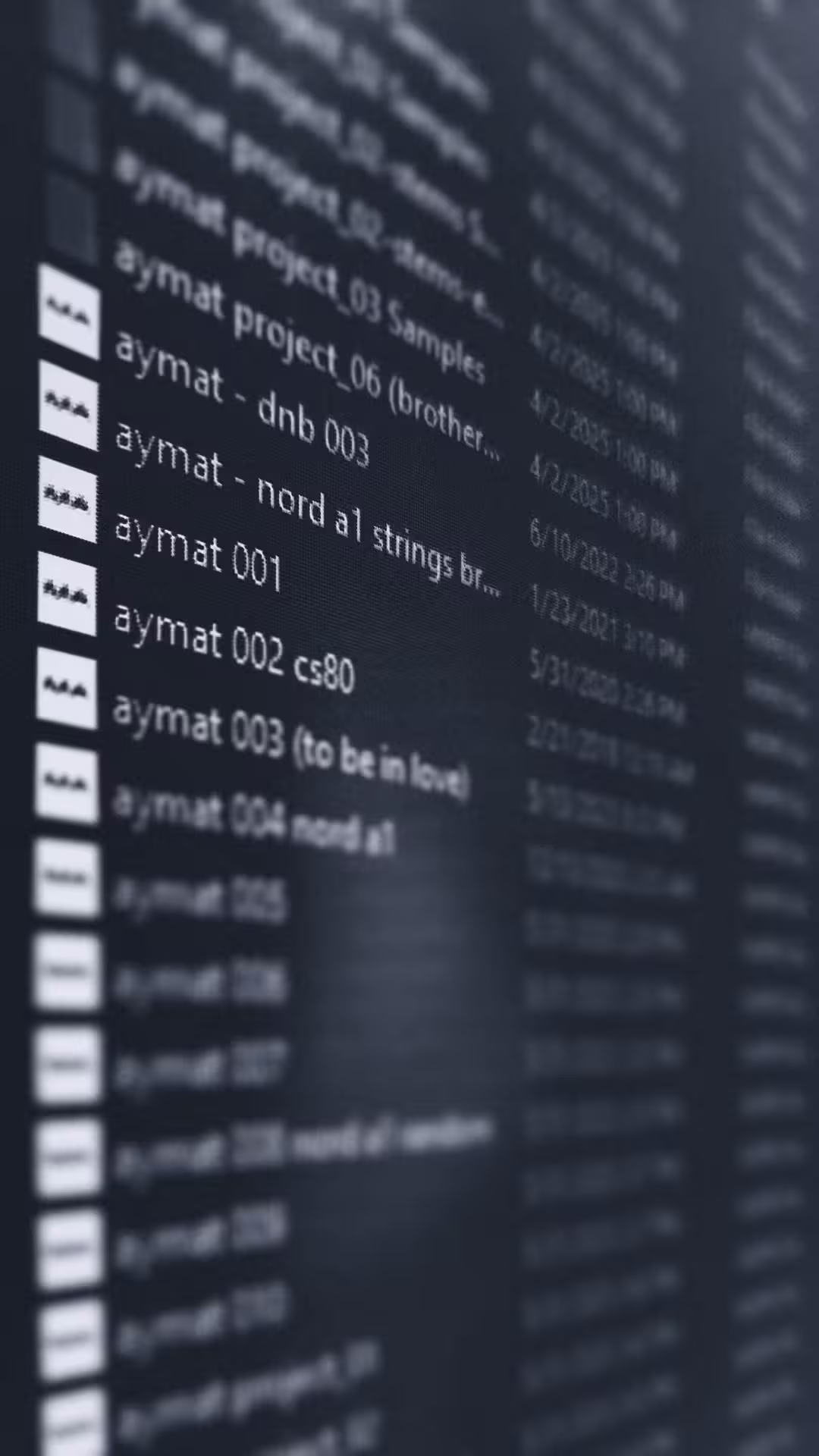
Creativity is abundant in producers. It’s also one of our biggest obstacles. Starting and abandoning tracks isn’t a discipline or motivation problem… it’s overload. Too many ideas, attention split in too many directions and suddenly you have hundreds of unfinished projects on your hard drive.
What helped me break out of that loop was surprisingly simple. I paused at creating new projects and started organizing what I already had. Over the course of a year (yes, that long), I went through every single project on my hard drive and forced myself to make a decision for each one. Then I organized them into three separate folders: YES, NO, and MAYBE.
The YES folder was for tracks with an immediate vibe. Maybe not perfect or finished, but definitely promising. If it made me nod my head without thinking or resulted in instant stank face, it went straight in. That reaction mattered more to me than anything technical.
The NO folder was easy. Projects that didn’t hold up, anything that felt flat or sessions that were broken beyond repair because of missing files or plugins. No second guessing and no “maybe later”.
The MAYBE folder sat in between. These were projects that loaded properly and had at least one element worth keeping, even if the whole track wasn’t there yet. Maybe it had a partial vibe, interesting sound or a nice chord progression. Something to build from but not something I’d prioritize right away.
And that’s the process that started to change everything for me. Instead of adding to a sea of unfinished ideas, I had a clear place to focus. It also revealed how much unrealized potential was already there, letting me focus on the tracks that mattered most. That was the game-changer… learning where to direct my attention.
When Refining Becomes Avoiding
Perfectionism is something every producer has wrestled with at some point. We’ve all been there… spending countless hours adjusting EQ, layering more synths or endlessly reworking a mix. The problem is that perfectionism doesn’t feel like a problem while you’re in it. It feels like progress, but more often than not it just keeps you stuck in a loop. At a certain point, the process drifts away from the music and becomes more about control. That’s where a lot of tracks stall out… right near the finish line.
The point isn’t to stop caring about quality, it’s deciding whether the idea is strong enough to stand on its own. For me, that meant setting simple deadlines and respecting them, treating a rough arrangement as a win and accepting that a track can always be improved later. And sometimes just letting a track go and moving on is the best thing you can do for it.
Why Workflows Matter
One of the biggest things that held me back from being consistent was a lack of organization. When your projects are scattered and all over the place, it becomes harder to focus on the actual music.
Establishing a solid workflow removes that. It gives you a clear place to start and a clear path forward, so your energy goes into creating instead of managing. For me, that came down to a few key changes:
- Creating a group structure to organize ideas as I work
- Naming each track based on its group: (ex: drums-kick, atmos-pad, bass-sub)
- Breaking the process into stages: composition > arrangement > mix > master
The biggest change was building a consistent group structure inside every project. As I create, everything gets placed into a corresponding group. My sessions usually look something like this:
- Atmos: pads, textures and soundscapes that sit in the background
- Drums: all percussive elements, from single hits to loops and breaks
- Bass: sub, synth bass or anything holding down the low end
- Keys: pianos, electric keys and organs
- Synths: leads, arps and mid-range synth elements
- FX: risers, impacts, transitions or anything adding tension or movement
- Vocals: acapellas, chops, vocal phrases and textures
It’s not complicated but it does help keep everything organized while I’m building ideas. I’m not stopping to think about where something should go, it just becomes automatic so at a glance I know exactly what I’m looking at. It also makes exporting stems much cleaner later on, since everything is already organized without any extra effort. It might sound like a small thing, but this kind of structure removes a huge amount of friction, and makes it a lot easier to stay focused and keep things moving forward.
The Mind Games We Play
Mental blocks and self-doubt are huge reasons why tracks stay unfinished. I’ve sat in front of countless tracks and thought, “It’s not good enough” or “I just don’t have the skills yet”. That feeling can be paralyzing.
A few things I’ve learned that help:
- Step away for a short break when you feel stuck. The track often reveals where it needs to go when you return with fresh ears.
- Work on small sections rather than trying to do everything at once. Finishing the intro or drop can build momentum.
- Get feedback from people you trust. It’s amazing how a fresh pair of ears can clarify what’s working and what isn’t.
Confidence gets built over time and every track you finish reinforces that you can do this.
Simplicity is Your Friend
Over-complicating tracks is one of the easiest traps to fall into. Whether it’s chasing the “perfect” plugin, stacking too many layers or adding more effects… all these things only make it harder to finish.
What helped me was focusing on what matters. If it isn’t adding something meaningful, it’s getting in the way. Remember, removing things is just as important as adding them. Most of the tracks I finish and connect with are the ones I kept simple.
When you’re stuck, focus on the elements that define the track. For me, that’s the groove and melody. I keep them as stripped back as possible. If a sound isn’t adding to either, I get rid of it.
The Weight of Being Heard
Another reason tracks don’t get finished is fear. Fear of putting your music out, fear of judgment, fear of it not landing the way you hoped. It’s easy to tell yourself the track needs more work, but most of the time that’s not what’s going on.
I’ve had plenty of tracks that never saw the light of day for that reason. They were almost done, sometimes finished, but I kept telling myself they weren’t ready. Or I wasn’t ready. In reality, I just didn’t want to deal with the moment where it stops being private and becomes something others can hear and judge.
There’s something vulnerable about releasing music. Up until that point, it’s yours. You can tweak it, rethink it, keep it in your own world. The second you share it, that changes. If you’re not used to that feeling, it can be enough to stop you from taking the final step.
What helped me was taking the pressure off that moment. Instead of treating every release like a big statement, I made it smaller. Sharing tracks on forums I frequent, or privately with people I trust, just to see how it feels and how others react without having to prove anything.
Fear is normal, but when you remove expectations it becomes easier to move through it. Each release became less tied to validation and more focused on progress. You start to see nothing bad really happens and even when something doesn’t land, there’s always something to learn.
Releasing isn’t a final judgment on your ability, it’s part of the process. The more you do it, the less weight it carries. Eventually, it stops being something you avoid and becomes just another step in finishing music.
Momentum Over Perfection
After years of trial and error, the lesson that changed everything for me was this: momentum beats perfection every time. Finishing a track isn’t about making it perfect, it’s moving forward, making decisions and putting your work out into the world. I now approach finishing music with three steps:
- Define what “finished enough” means
Set a rough guide for what completion looks like. Not perfect, just complete. A clear arrangement, a solid vibe and a mix that holds together. Enough to move forward. - Focus on the next step, not the whole track
Instead of thinking about everything left to do, I narrow it down to one action that moves the track forward. Maybe it’s finishing the arrangement, tightening the drums or balancing the mix. - Let it go and put it out, even if it’s not perfect
At some point, you have to decide the track is done. Whether that means sharing it, uploading it or just exporting and calling it finished, this is where growth happens.
This mindset changed how I work. Momentum builds confidence, and confidence makes it easier to finish a track and move on to the next.
Closing Thoughts
I’ve spent almost thirty years making music and learning to balance creativity with consistency. For most producers, the real barrier isn’t talent or tools, it’s the habits that keep tracks stuck in that “almost done” stage.
I still have unfinished tracks and always will. But now I know how to get them across the finish line. If that’s something you’re working towards, feel free to reach out.
Remember, every track you finish is a step forward. Momentum builds with each decision and every time you let your music exist outside your head. The goal isn’t perfection, it’s progress. And every step brings you closer to sharing the music only you can make. – 
Frequently Asked Questions
Why do most producers never finish tracks?
It’s rarely about talent or gear. The most common reasons are creative overload, perfectionism that masquerades as progress, and a lack of workflow structure. Most producers have too many unfinished ideas competing for attention at once, which makes it hard to commit to any single one.
Is having too many unfinished projects normal?
Completely. Most producers have hard drives full of half-finished ideas. The problem isn’t starting too much… it’s not having a system for deciding what’s worth finishing. Organizing projects into clear categories (yes, no, maybe) is one of the most effective ways to cut through the noise.
Why does perfectionism keep tracks unfinished?
Because it’s one of the sneakier obstacles… it feels like you’re still making progress. At a certain point, endless tweaking stops being about the music and starts being about avoiding the moment you have to call it done. Setting simple deadlines and treating a rough arrangement as a win helps break that loop.
How important is workflow for finishing tracks?
More important than most producers realize. A consistent structure… named tracks, organized groups, a clear progression from composition to mix… removes friction before it starts. When you’re not stopping to figure out where things go, your energy stays on the music.
These patterns go deeper than workflow. Next: The Psychology of Being a Producer
"Most producers I know share the same quiet graveyard of half-finished tracks, and the reasons behind it are much deeper and more universal than simple procrastination or lack of talent."
"The problem is that perfectionism doesn’t feel like a problem while you’re in it. It feels like progress, but more often than not, it just keeps you stuck in a loop. That’s where a lot of tracks stall out."
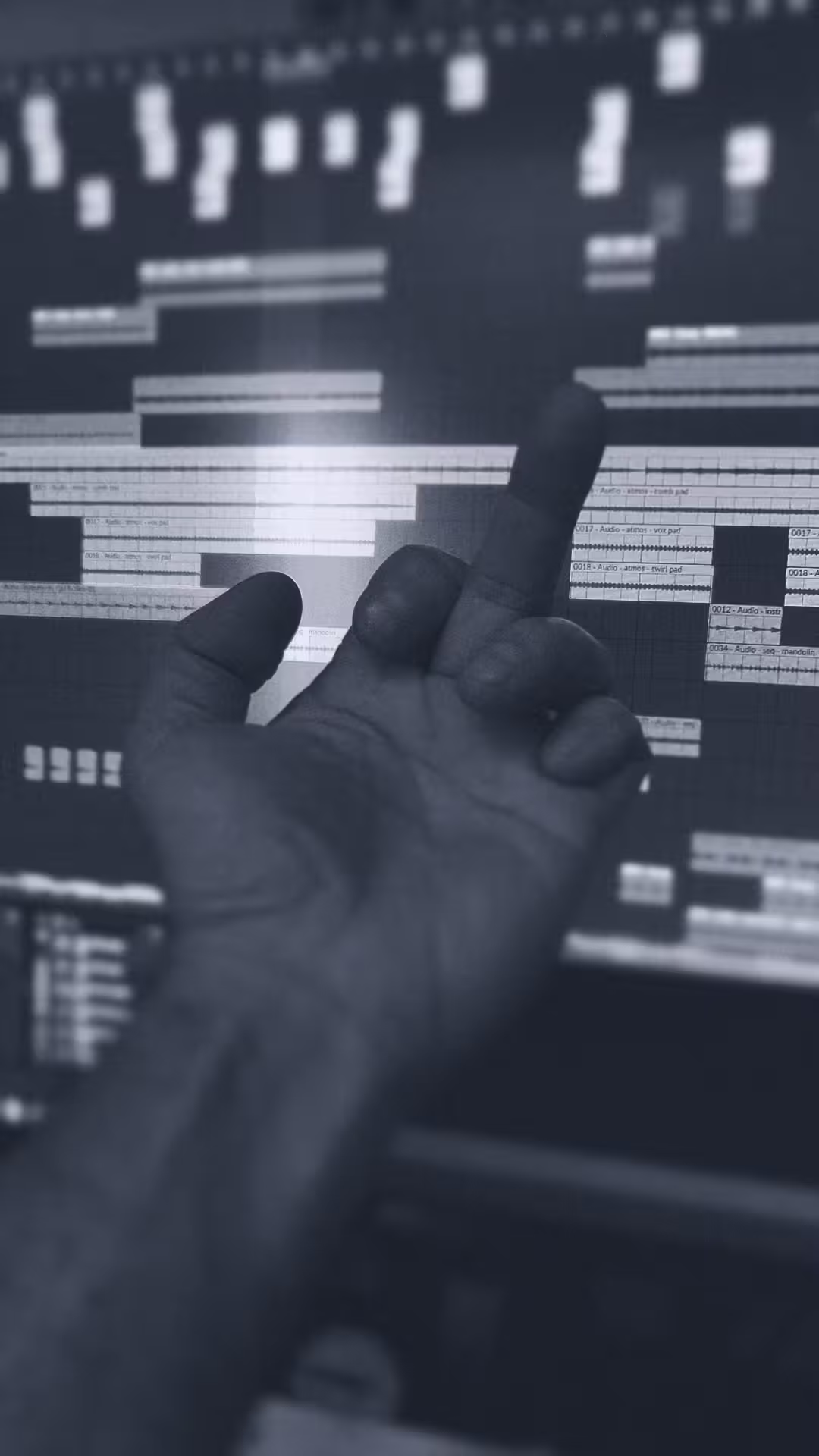
"After years of trial and error, the lesson that changed everything for me was this: momentum beats perfection every time. Finishing a track isn’t about making it perfect… it’s about moving forward, making decisions, and putting your work into the world. "
"Remember, every track you finish is a step forward. Momentum builds with each decision you make and each time you allow your music to exist outside your head. The goal isn’t perfection, it’s progress. And every step you take brings you closer to sharing the music only you can make."
About the Author: aymat

If this helped you, share it:
Related Posts