The Missing Key to Finishing Tracks
By now, if you’ve made it through the previous articles, you’ve probably noticed a pattern. Finishing tracks has less to do with gear or plugins and more to do with the abstract stuff… the cerebral, harder to pin down side of it. And yet…
There’s no shortage of music production tutorials. Log into YouTube and you can spend hours watching EQ guides, compression tips, the latest gear roundups, the top 10 plugins that shouldn’t be free… but they are.
What I’ve found in that endless sea of oh-faced thumbnails is that rarely is there simple, practical advice for how to finish tracks consistently. And what actually worked for me isn’t what most people would expect.
For most of my time as a producer, I treated making music like a math problem. To be honest, I still struggle with that inclination. I’m a very analytical thinker, so problem solving comes naturally. It’s why things like writing code or drawing click for me… they’re heavily pattern-based. Music is a little different. The patterns are there, but they’re harder to see because there’s a deeper emotional layer that either turns a track into an algebra equation or lets it become something else entirely.
Two Kinds of Music
There’s music that plays while you’re sitting at the dentist office. Music in the background while you shop. Music that plays quietly while you work. There’s nothing wrong with any of that.
And then there’s music that moves you. Music you feel. Music that changes you, makes you reflect, pulls at something. That’s the kind of music most of us as producers want to make… and rarely do.
I think a big part of that is because we focus too much on what we think the music needs to be, instead of letting it become what it can be. When you treat it like a step-by-step process, it stops being about you. It’s like making cookies from a box mix… everything is measured out for you. You just add eggs and butter, stick it in the oven, pull them out fifteen minutes later. They’re fine. But fine is all they’ll ever be. Nobody remembers box cookies.
Feel is what’s missing from the box.
The Tool Nobody Talks About
So how do you feel your way through a track? How do you express something emotional through something like dance music? Because electronic music isn’t something most people associate with feeling… but those of us who have been producing and listening for a long time know that’s far from the truth. Music is music regardless of how you make it. And when you use feel as your guide, you get closer to making something that actually resonates. Something that communicates exactly what you were feeling when you made it. People might interpret it differently, but the sentiment is there.
We’ve all spent years listening to music and developing a sense of what sounds right to us. But translating that into something of your own is a completely different process. That’s exactly where feel comes in. That internal sense… that’s what should be at the top of your list when you’re stuck. It’s the thing that tells you when something is missing… or when something needs to go. When you’re not sure where to go next, close your eyes and listen. At some point you’ll feel where the tension needs to go, whether it needs to build or release. From there, you add or strip back.
It might seem counterintuitive if you’ve never worked this way. Feeling your way through a track can feel like being in a boat without an oar. But here’s the thing… as humans, we’re wired to feel. That can be a blessing and a curse for all sorts of reasons, but when it comes to making music, I’d argue it’s one of the most important tools we have. Maybe the most important.
Tension Is Everything
Great music is emotional and it flows. It has peaks and valleys the same way a good film does. That’s where tension comes in.
I get a little nerdy here, but bear with me because it’s worth it.
Think about FM synthesis. You have a carrier wave and a modulator. The modulator affects the carrier and that interaction creates something richer and more complex than either wave on its own. Now apply that idea across the length of a track. The track itself is the carrier. Your individual elements are the modulators, each one shaping and affecting the whole. You can use them to increase or decrease tension across the entire thing. And tension is important because without the dips and valleys, you can’t build to anything.
Peaks and valleys. Tension and release. They’re all expressions of the same idea… a wave with ups and downs. And the goal is to use that movement to trigger something emotional in the listener. What that emotion is, that’s entirely up to you. It can be jubilation, melancholy, reflection, raw energy. The beauty of it is that all of that is different for each of us.
Whenever I run into a wall making a track, it almost always comes back to feel. Either too much or too little. Or feel that’s pointed in the wrong direction. Finding the balance is the key. And sometimes it’s just about understanding where that feel needs to go.
Where to Pull From
If you’ve never worked this way before, the best starting point I’ve found is leaning into music that has left a deep impression on me. And I’m not even talking about other electronic music. I pull from my entire life’s worth of listening. Doesn’t matter if it’s folk, rock, hip hop, or house. All of it is a source. The best music to pull from is the music I feel most connected to.
It can be as simple as trying to replicate a feeling, not the sound, in the context of something you’re making. The point is simple: if you want to make music that resonates, feeling is the tool that gets you there.
The Elements That Carry It
So what do you actually use to build all of this?
Feel might be the structure, but music has a foundation it rests on. Seven core elements that work together to create emotional impact. You already know what these are. This isn’t about learning them. It’s about hearing them differently.
- Rhythm is what moves people physically. It’s the pulse, the groove, the thing that makes someone nod without thinking.
- Melody is the emotional thread. It’s what people remember and what they hum long after the track ends. A strong melody can carry a track on its own.
- Harmony is the color underneath the melody. The chord progressions, the mood they create, the way they make space for something to feel resolved or unresolved.
- Timbre is the personality of each sound. Two sounds can play the same note and feel completely different. It’s probably the most personal element you have.
- Dynamics are your peaks and valleys in practice. The loud and quiet. The space and moments that hit harder because of what came before them.
- Form is how the track is shaped over time. The arrangement. Where things build, where they breathe, where they land.
- Texture is the layered feel of everything together. Sparse or dense, wide or narrow. It affects how much emotional space a listener has to sit in.
Learning to Hear It
The thing is, you don’t need to consciously run through all seven of those elements while you’re making a track. That would kill the whole thing. What they give you is a language for something you’re already sensing.
When a track feels off and you can’t explain why, it’s almost always one of these things pulling in a direction that doesn’t match the feeling you’re going for. Too much texture and there’s no room to breathe. Dynamics that never dip and the tension has nowhere to go. A melody that doesn’t quite carry the emotion you had in your head when you started.
Most producers try to fix those moments with more… more layers, more plugins, more processing. But if feel is your guide, then the question isn’t “what can I add?” It’s “what is this track trying to say, and is everything here in service of that?”
That’s a different question. And it changes how you listen.
The Other Side of It
There’s a reason this is the last article in this series. Everything before this was clearing the path. This is where it was always headed.
Everything changes the moment you stop treating music like a problem to solve and start letting feel be your guide. You stop looking at it like an equation and start treating it as a conversation. Between you and the music, and eventually between the music and whoever hears it.
That’s what consistency actually looks like. Not finishing more tracks by forcing them through a process. Finishing more tracks because you trust yourself enough to feel your way through them.
This whole series came from the same place you might be in right now… and I still go through it. The difference is I don’t get stuck there anymore. And you don’t have to either.
If any of this hits close to home, I’d genuinely love to hear about it. Reach out, leave a comment, let me know where you’re at. – 
Frequently Asked Questions
What does “feel” actually mean in music production?
Feel is the emotional layer underneath the technical decisions. It’s what separates music that moves people from music that’s just well-made. It’s not about genre or complexity… it’s about whether the decisions you’re making are coming from somewhere real or just following a process.
How can I learn to produce with more feel?
You can develop it, but not by studying it technically. It comes from listening deeply, from being honest about what you actually respond to in music, and from making decisions based on what feels right rather than what seems correct. It’s more like a muscle than a technique.
Why don’t more producers talk about feel?
Because it’s hard to quantify and even harder to teach. Most production content focuses on the technical side because that’s easier to explain in a tutorial. But the producers whose music actually connects with people… they’re making decisions based on feel whether they call it that or not.
Is feel more important than technical skill?
Not more important, but it’s the thing that’s missing for most producers who already have the technical skills. At a certain point, knowing more about EQ or compression isn’t what’s going to get your tracks finished or make them resonate. Feel is what closes that gap.
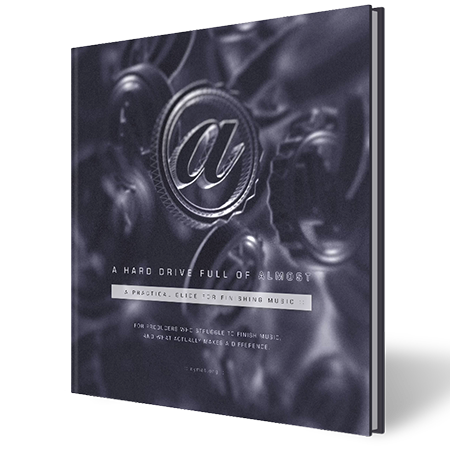
If you want to go back to where this all started, the first article is here.
"It’s like making cookies from a box mix… everything is measured out for you. They’re fine. But fine is all they’ll ever be. Nobody remembers box cookies."

"We've spent years listening to music and developing a sense of what sounds right to us. But translating that into something of your own is a completely different process."
"Whenever I run into a wall making a track, it almost always comes back to the same thing. Finding the balance is the key. And sometimes it's just about understanding where that needs to go."
"There's a reason this is the last article in this series. Everything before this was clearing the path. This is where it was always headed."
About the Author: aymat

If this helped you, share it:
Related Posts