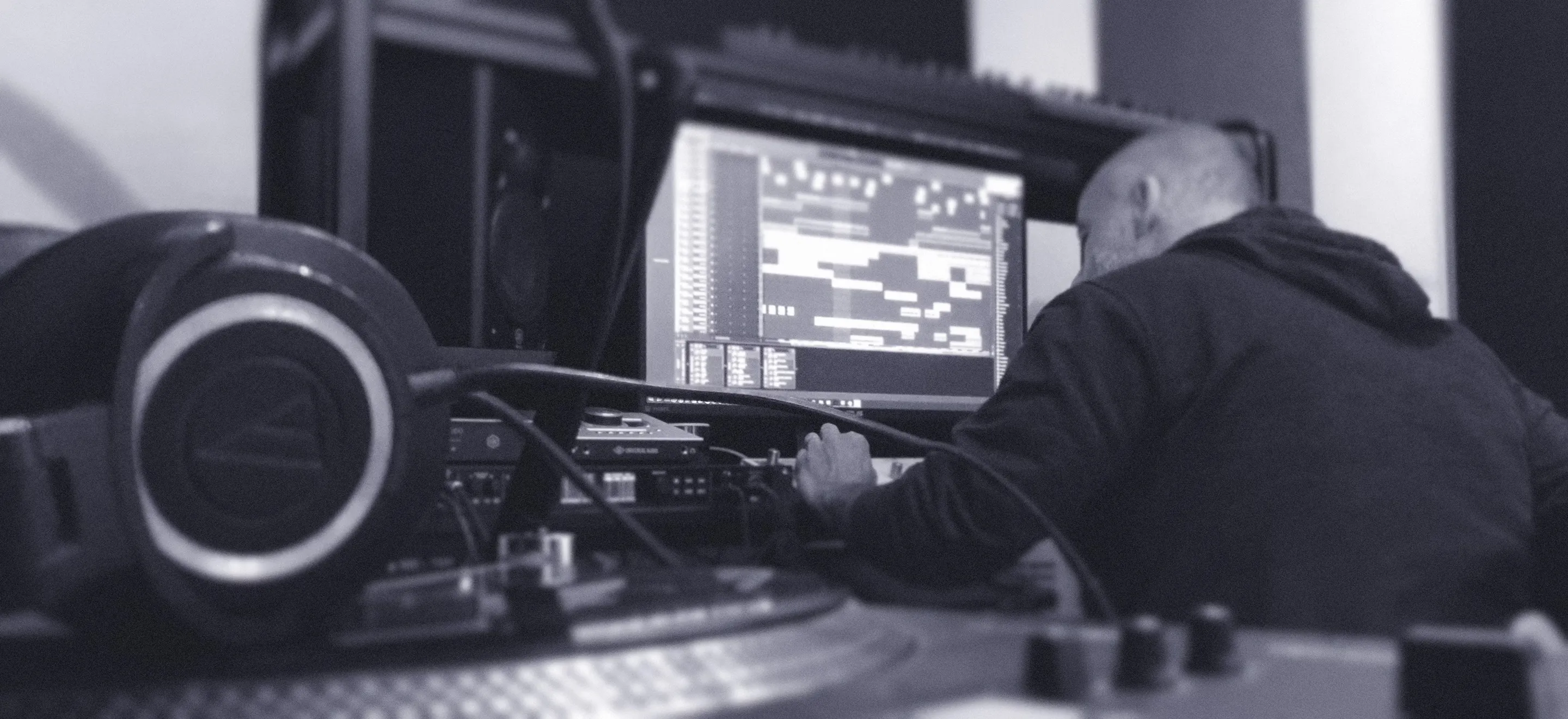
The Psychology of Being a Producer
Apr 8, 2026 - 12 min
Before I jumped head first into music production in the late 90s, I had been working as a professional illustrator for close to 7 years. I was hired out of high school to work for an independent comic book company and at the time, I thought that was what I’d be doing for the rest of my life. I was good, the future looked promising, and everything seemed to be moving in the right direction.
But over the course of a year, I managed to turn what could have been something solid into nothing. It’s still one of the more difficult experiences I’ve gone through creatively, and looking back now I can see that the pattern that led to that didn’t just disappear. It kept showing up in other parts of my work and it took me a long time to recognize it.
It wasn’t always like that… there were plenty of times where I could finish artwork without it turning into a struggle, usually when I was fully locked in and things were flowing. But the moment I started overthinking, that changed. Things would stall out, ideas would sit half finished, and eventually they’d just stop going anywhere.
What I didn’t fully realize at the time was how much that same pattern was starting to show up not just in the process, but in what I was leaving behind.
Like my own version of a track graveyard, I had an illustration graveyard too. Sketches, unfinished paintings… things that never quite made it to the end. The difference was that drawing was something I had been doing since I was a kid. The process was already there, baked in to a certain extent, so even when things stalled I could usually follow through.
Music production wasn’t like that.
I didn’t come from a musical background and like most things I’ve gotten into, I had to figure it out on my own. There was a steep learning curve and the only way I’ve ever really learned anything is through a lot of trial and error… pushing through until something clicks.
It took me a while to recognize it, but the same patterns I had run into before started showing up again. If you’re like me, you’ve probably been there too.
The familiar pattern
That pattern usually starts the same way. You open up a new project and there’s no pressure yet. You’re just exploring, trying things out, following whatever feels interesting in the moment. Ideas come easily, decisions don’t feel difficult and there’s a sense that this one might actually turn into something. But as the track starts to take shape, something changes.
It’s not as clear anymore. You start questioning whether things are working, wondering if it’s going in the direction you thought it would. That’s usually where things start to break down.
Now you’re tweaking small details, going back and forth on ideas, comparing it to other tracks, trying to figure out what’s missing. Hours, sometimes even days go by, and at some point it feels like you’re spending more time fixing things than making them.
And then, almost without realizing it, you stop opening that project. A new idea comes along, and the whole process starts all over again.
Understanding the loop
Loops, cues, patterns… the language of production maps pretty closely to how the brain works. Not because someone borrowed the terminology, but because they’re describing the same kind of thing… cycles that repeat until something interrupts them.
When you hear the word “loop”, you’re probably visualizing a DAW session with loop markers set around a 16 bar section. Ironically, for those of us who struggle to finish music, there’s another kind of loop already running in the background… one we’re usually not aware of.
The kind I’m talking about isn’t technical. It’s cognitive and behavioral. Patterns in which we repeat the same thoughts and actions, even when they lead to the same frustrating outcome. And once you’re in it, it’s not always obvious that it’s happening.
These loops have shown up regularly throughout most of my life… and still do. Most of the time it’s creativity loops. Other times they’re different. Downloading is a big one for me. I’ve gone through cycles of obsessively downloading mp3s, plugins, software… I even became obsessed with downloading STL files at one point… and I don’t even own a 3D printer.
There’s been a lot of research around this. In some cases, it shows up as a failure in how our brains register when something is complete, creating a kind of ongoing error signal that never fully resolves. Instead of moving on, our mind keeps returning back, trying to fix something that doesn’t feel finished.
If you think about your own process, it starts to sound familiar.
This kind of repetitive thinking is closely tied to rumination, where the mind keeps replaying something in an attempt to resolve it. It’s meant to help and to prevent mistakes or avoid something going wrong, but it tends to do the opposite. The more you focus on what isn’t working, the more it reinforces the sense that something is wrong. And that’s where the loop starts to build.
Over time, it becomes less of a conscious choice and more of a habit. You start responding to that feeling in the same way every time… tweaking, second guessing and going back over the same decisions without making any progress.
There’s also a reward element baked into this. Starting something new feels good. There’s energy and possibility around that initial flood of creativity. It’s a very different feeling from being stuck in the middle of a track trying to figure out what isn’t working. So without realizing it, you begin to associate starting with that reward and everything after with friction. That’s how the cycle reinforces itself.
Starting vs finishing
Starting something new doesn’t carry any of that weight. There’s no expectation yet, no pressure for it to be good, no need to commit to anything. It’s all possibility and that’s why it’s so easy to stay in that phase.
Finishing is different.
Finishing means deciding that something is what it is. It means letting go of all the other directions it could have gone in and accepting whatever it ended up becoming. It asks something different of you. You’re not exploring anymore. You’re committing. And for a lot of people, that’s exactly where things stop.
Eventually, you start to recognize it while it’s happening and it doesn’t catch you off guard in the same way. But keep in mind it never really goes away. You still go through the same phases, the same periods of doubt, the same uncertainty. The difference is in how you respond to it. Instead of seeing it as a sign that something’s wrong, you start to see it as part of the process itself.
Interrupting the cue
Now let’s talk about the word “cue.” It’s something we use all the time in production and DJing… it’s a point to jump from, a marker that tells you when something begins. There’s a similar idea in how habits work.
Most patterns follow a simple loop… a cue, a response, and some kind of reward. The cue is what sets everything in motion. It can be obvious or so subtle you barely notice it, but once it’s triggered, the rest tends to follow.
In music production, that cue is often the moment things stop feeling easy. That change when the track stops feeling effortless and starts feeling forced… that’s usually where the loop begins.
Up until then, you’re not overthinking things. You’re just following what feels right. But as soon as the track starts to take shape, that changes. You start evaluating everything in real time and every decision gets run through questions like:
What’s next?
Is this good enough?
Am I good enough?
Does that sound right?
Is this worth releasing?
From there, the response is almost automatic. You tweak, second guess, go back over the same decisions, trying to resolve the impression that something isn’t right. And eventually, the loop completes itself. You step away, start another project, and get that initial surge again. That feeling… that’s the reward. The reset. The part that quietly reinforces the pattern.
The first step isn’t actually fixing it. It’s simply noticing it’s happening at all. That moment when things change… that’s your cue. And once you can see it for what it is, it begins to lose some of its grip. You’re not just reacting anymore, you have a chance to respond differently. And that’s where the real change happens, not because you’re trying to get rid of the feeling, but because you’re changing what you do when it shows up.
The role of uncertainty
A lot of this comes down to how open-ended the process of making music is. There’s no single correct way to finish a track. No clear signal that tells you you’re doing it right. Most of the time, you’re making decisions without knowing if they’ll actually work until much later.
Some people are more comfortable with that than others. If you’re not, it’s easy to start second guessing everything, looking for certainty where there isn’t any, or trying to resolve things too early. And that’s usually when momentum starts to break down.
The best way I learned how to deal with it was by doing something I was genuinely uncomfortable with. For me, that was arranging a track. It might seem trivial, but that was my Mount Everest. I forced myself to grab a 16 bar loop, organize it into individual tracks, and just lay them down one at a time in the timeline.
Looking back it’s almost laughable, because as soon as I was in it, my creativity kicked in and I felt my way through it. The same way I do when starting a track, only this time the thing I thought was the most difficult part turned out to be not only easy but probably the most enjoyable part of the whole process… because I finally got to hear it unfold. That wasn’t a technique or a workflow change. It was doing the thing I kept avoiding until it wasn’t scary anymore.
Below the surface
There’s no shortage of things that can get in the way. And a lot of them aren’t really about the music itself. Validation, self-worth, fear, self-doubt, imposter syndrome… these things tend to surface more in creative work than almost anywhere else, probably because the work feels so personal. There’s a strange tension in that.
When you’re in the middle of creating, it can feel effortless. You’re absorbed in it, focused, almost disconnected from everything around you. But as soon as you start thinking about sharing it, something changes. And what seemed completely natural at first, suddenly feels exposed.
Sometimes it’s self-doubt, coming from the gap between what you hear and what you can actually make. Other times it’s the need for validation, questioning whether you’re good enough or if you even belong doing this at all. A lot of it ties back to how you see yourself and how you think others will see you.
And sometimes it’s more direct than that. You might simply not have the skills yet to match what you’re aiming for. You’ve spent years listening to music and developing a sense of what sounds right to you. But translating that into something of your own is a completely different process. So you end up in this uncomfortable place where you can clearly hear what’s missing, but you can’t always figure out how to get there. That gap is real and it doesn’t close overnight. Sitting with it long enough without giving up is a big part of what eventually gets you through it.
Once you see it
Most producers go through some version of this, whether they realize it or not. The difference isn’t usually talent or tools or even knowledge… it’s how aware you are of what’s going on while you’re in it.
I still go through it. The doubt, the stalling, the moments where a track feels stuck in a loop. But it doesn’t derail things the way it used to, because I know what it is now. And knowing what it is makes it a lot harder for it to convince you that something’s wrong.
Once you start to see the pattern, it changes how you move through it. Not all at once, but enough to keep things from stalling in the same place every time. – 
Frequently Asked Questions
Why do producers keep starting instead of finishing?
Starting a new track feels good. There’s no pressure yet, no expectation, just possibility. Finishing asks something different of you… it means committing to what something is and letting go of what it could have been. For a lot of producers, that’s exactly where things stop.
What is a creative loop and why does it keep happening?
A creative loop is a repetitive cycle of thought and behavior that leads to the same outcome… usually a track that never gets finished. The brain keeps circling back to fix something that doesn’t feel resolved, which reinforces the sense that something is wrong. Over time it becomes a habit, not a choice.
Can you ever fully break out of creative loops?
Not entirely, and that’s worth knowing. The loop doesn’t disappear, but you get better at recognizing it while it’s happening. Once you can see it for what it is, it loses some of its grip. The goal isn’t to eliminate doubt… it’s to stop letting it make decisions for you.
Is finishing tracks a psychological or technical problem?
Mostly psychological. Most producers who can’t finish tracks already have the technical skills to do it. What gets in the way is the pattern of overthinking, second-guessing, and comparing… the mental side of the process that nobody really talks about.
If you want to know where a lot of this came from for me personally, this is the backstory: A Short History of My Production Journey
“Loops, cues, patterns... the language of production maps pretty closely to how the brain works. Not because someone borrowed the terminology, but because they're describing the same kind of thing... cycles that repeat until something interrupts them.”
“Finishing means deciding that something is what it is. It means letting go of all the other directions it could have gone in and accepting whatever it ended up becoming. You're not exploring anymore. You're committing.”
“I still go through it. The doubt, the stalling, the moments where a track feels stuck in a loop. But it doesn't derail things the way it used to, because I know what it is now.”
By aymat | Apr 8, 2026 | Mindset & Creativity
About the Author: aymat

I've been a developer and music producer for almost 30 years. For a long time I struggled to finish and release music, but over time I found a way of working that helped me follow through. These days I'm focused on making work I care about, finishing music and helping others do the same along the way. I put together a free PDF on what actually worked for me. If you're working towards doing the same, get in touch.