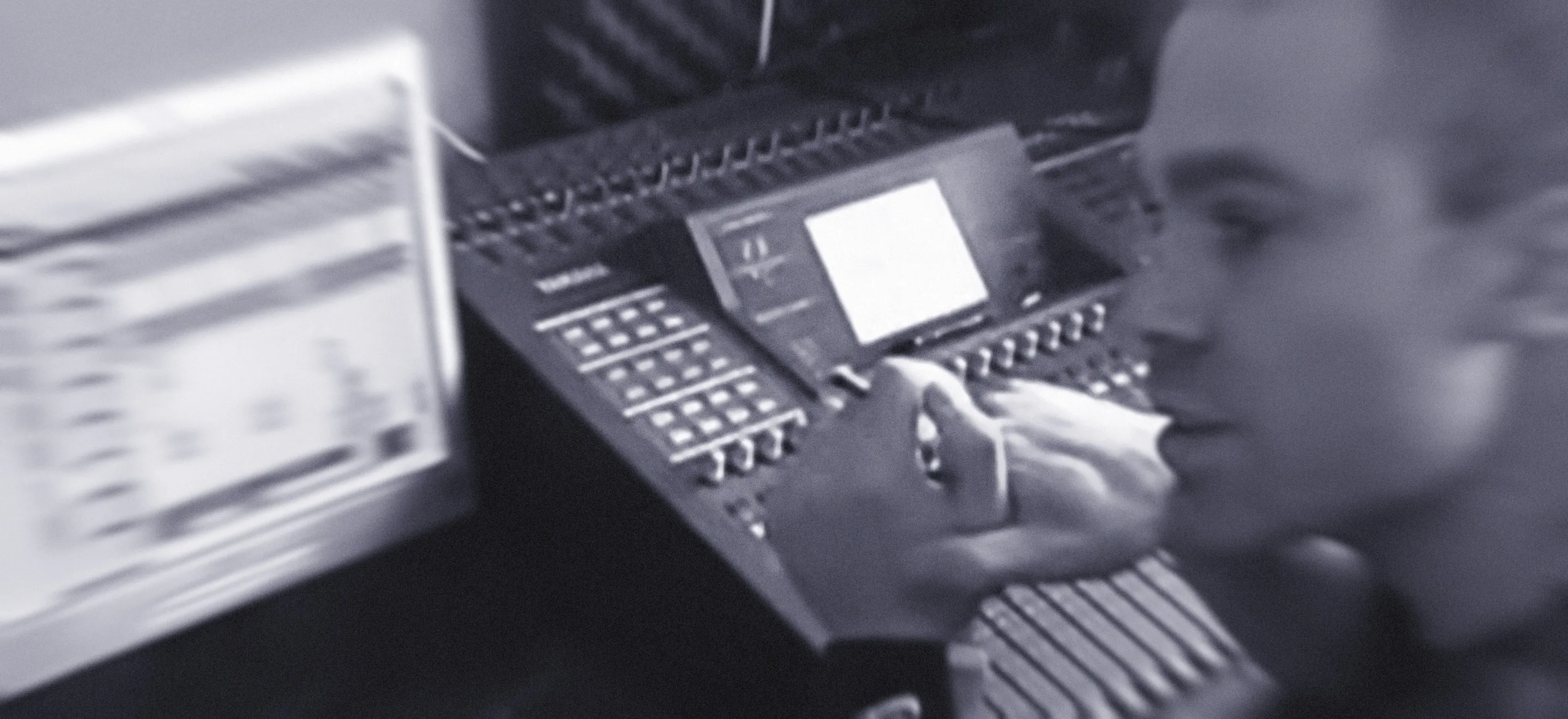
The Most Important Production Tutorial Video You Will Ever Watch
Nov 10, 2026 - 10 min
In the never-ending sea of "how-to" production tutorials, you'll find a video for just about anything you want to learn about. Don't know what compression is? There's a video for that. Suck at EQing? There are thousands of those as well. Name your poison and there's a video somewhere out there for it. Most of them are well-meaning, but a lot of them are just sponsored ads for some plugin or service, and honestly should have never been uploaded in the first place.
I work in marketing, which means it's safe to say I fucking HATE advertising. So when you come across genuinely useful and practical information that isn't trying to sell you something, it's a breath of fresh air. And when it's a video that changes how you approach and think about production, it can be a real turning point.
And that's what I'm here to write about today. The video in question is nearly 20 years old and has helped me more than any other production tutorial I've ever watched, and it still does. This unassuming gem is a masterclass by the producer known as El-B.
If you don't know who El-B is, he's a producer whose career spans more than three decades and who is widely recognized as one of the key pioneers of dubstep and a foundational figure in UK Garage. He's also an original member of the influential UKG duo Groove Chronicles, alongside Steve "Noodles" Jude, and the founder of the independent record label Ghost Recordings.
Originally, the video came bundled on the promo disc of Computer Music issue CMU116 back in the summer of 2007. In those days, only a few newsstands sold the magazine where I lived, and by the time I managed to find a copy, someone had already ganked the DVD from the cover. So I didn't actually come across the video until several years after its release. But let me just say, once I found it, it changed EVERYTHING about how I approach and think about music production.
You're probably thinking right now "Everything? Alright, relax, guy." But hear me out. You have to understand not all production tutorials are created equal. And this one in particular is more of a philosophical guide for making decisions. If El-B were Miyamoto Musashi, this video would be The Book of Five Rings. And just like Musashi's book, his philosophy is heavily rooted in keeping things simple. Something that, ironically, I think is one of the hardest things for producers to master, particularly those who struggle to finish music no matter how much time they spend learning new techniques.
I've watched this video more times than I can count, and I still come back to it whenever I feel stuck or unmotivated. Part of the reason is El-B's no-BS approach to making music. He's not interested in showing off equipment or complicated production techniques. He's not selling you a fucking plugin or making some gatekeeping purist rant. He freely shares his experience and knowledge about focusing on the fundamentals: groove, rhythm, melody, sound selection, arrangement, and most importantly, how all these elements work together.
I know there are plenty of videos out there labeled "masterclass," but this one genuinely earns the title. I'd strongly recommend sitting down and watching it from beginning to end. No... I IMPLORE you to do it. If you're short on time, or simply have the attention span of a gnat, here are just a few of the lessons that have stuck with me the most.
1. Keep things simple
07:25: "People are quite astonished when they see what we do not use."
This is arguably the central philosophy of the entire masterclass. Pay attention to his studio. He's working with an old computer, a dated copy of Cubase and some outboard gear. That's pretty much it. Modest by today's standards, especially when I think about how much processing power, software and plugins I've got installed on my own computer.
Even the shittiest modern mobile phone probably has more processing power than everything in his studio combined. And yet, he was making absolute HEAT back then, and continues to make great music today. That's a pretty powerful reminder that making good music has very little to do with how much equipment you own. It's about understanding what you have and knowing how to use it.
2. Don't let gear become a distraction
07:56: "I use volumes, panning, and EQ. I'm very basic. I live by them rules."
This is one of the parts I keep coming back to. GAS (Gear Acquisition Syndrome) is a real thing. And as much as I love the gear and technology behind making music, it can quickly become a distraction if you let it.
There's always another plugin to try, another synthesizer to explore or another piece of hardware that promises to transform your workflow. And before you realize it, you've spent three hours watching demos of something you don't need, while the track you were supposed to be finishing is still sitting there untouched. Acquiring more equipment doesn't necessarily make you better at making music, and it certainly doesn't guarantee you'll finish more of it.
El-B's approach is a good reminder to master the fundamentals before looking for something else to add to the equation. Volume, panning and EQ might not be the most exciting tools in the world, but they're incredibly powerful when you understand how to use them.
3. Three tracks can be enough
08:26: "I could get a groove going with three tracks."
This is probably one of the most important points in the entire video. There's a big difference between throwing a bunch of tracks together and creating something that actually makes people move. And when you're making dance music, that's kind of the whole point. A great groove doesn't need a ton of layers, endless processing or a complicated arrangement. It needs the right elements working together.
If you can create something interesting with just three tracks, you've already got the foundation for a tune. The challenge then becomes figuring out how to develop that idea without losing what made it work in the first place. And if you can't come up with an interesting hook and a groove using three tracks, maybe you need to go back and figure out why. Adding another twenty tracks probably isn't going to solve that problem.
4. Keep it moving without adding more
08:40: "When you check any good track, they're all very basic."
There's a section here where El-B talks about the structure of radio-friendly songs: verse, bridge, chorus. Verse, bridge, chorus. Then a middle eight to take the song somewhere else, before returning to the chorus and eventually bringing things to a close. And you've got to get all of that done in two and a half to three minutes.
He's talking about conventional songwriting structures, but the same principle applies to dance music. In fact, the challenge can be even harder. Most dance tracks run for five minutes or more, which means you have to find ways to keep the listener engaged without constantly introducing new elements. That means making the most of what you already have. That could be bringing elements in and out, adjusting the tension, introducing subtle variations or allowing a particular sound to take center stage for a while.
The trick is to keep things moving without adding things simply for the sake of adding them. A strong arrangement isn't necessarily one with the most elements. It's one where every element has a purpose.
5. Understand the music, not just techniques
22:04: "It's making the song melody work. Is it naff? Does it impress?"
Here El-B makes a really interesting distinction between the technical process of producing music and the actual challenge of writing a good song. Understanding how to use effects, arrange sections, operate your equipment and manipulate sounds is one thing. But knowing whether a melody works, whether an idea is compelling or whether something is musically effective is an entirely different skill.
You can have all the technical knowledge in the world and still struggle to come up with something worth listening to. This is something I feel doesn't get nearly enough attention in music production education. We spend so much time learning how to process sounds and improve our mixes that it's easy to forget we're supposed to be making music in the first place.
El-B also touches on the producer's responsibility for shaping the overall vision of a song. It's not just about making individual sounds work together. It's about understanding what the track is trying to achieve and making decisions in service of that.
6. Make decisions as you go
23:26: "I find myself doing it as I go along."
This is another brilliant insight into his workflow, and it addresses a trap that a lot of producers, myself included, have fallen into at some point. Rather than letting a pile of unfinished decisions accumulate, El-B resolves things as he works. It sounds simple, but think about how often we leave things for later. We'll finish the arrangement first, sort out the levels afterwards, worry about the sounds another time and leave the mixing until the very end. And then suddenly you have a track with all sorts of problems and now you have to go back and fix all that shit before you can move on.
Making decisions as you go means dealing with those things while they're happening. If something isn't working, fix it. If a sound needs changing, change it. If an arrangement feels too busy, strip it back. You don't need to get everything perfect immediately, but you gotta keep things moving forward.
Final takeaway
Honestly, I could go on and on about this masterclass. There's so much wisdom, humor, history and genuinely useful practical information packed into it. And I think a lot of that often gets lost in this weird little world we as music producers live in.
El-B's philosophy has become foundational to the way I approach making music. I genuinely credit this masterclass with helping me develop my own process for finishing tracks and will keep coming back to it whenever I need a reminder that this isn't rocket science.
The biggest lesson for me has been understanding the importance of simplicity. Not just using fewer sounds or less equipment, but learning to recognize what's actually important to a piece of music and, just as importantly, what can be removed. It's also taught me to think more about the music itself rather than getting caught up in the technical side of production. Ultimately, I think that's what separates learning how to produce music from learning how to actually make it.
So, if you haven't watched this masterclass, do yourself a favor and set aside some time to watch it from beginning to end. You might be surprised by just how much you take away from a video that's nearly two decades old.
And if you find it as valuable as I have, consider checking out El-B's music and supporting him through his socials below. He's probably helped more producers with this one video over the past 20 years than he'll ever realize, without charging a single dime for it.
That's class in my book. – 
"Acquiring more equipment doesn't necessarily make you better at making music, and it certainly doesn't guarantee you'll finish more of it."
"You can have all the technical knowledge in the world and still struggle to come up with something worth listening to."
"I genuinely credit this masterclass with helping me develop my own process for finishing tracks and will keep coming back to it whenever I need a reminder that this isn't rocket science."
By aymat | Nov 10, 2026 | Mindset & Creativity, Workflow & Productivity
About the Author: aymat

I've been a developer and music producer for almost 30 years, and for most of that time I struggled to finish music until I found a way through it. This free PDF covers what actually helped me. If you're having a difficult time finishing your own music or prefer a more hands on approach, that's what the sessions are for.